
Tonnes instead of kilograms
Mechanical application of expansive mortar
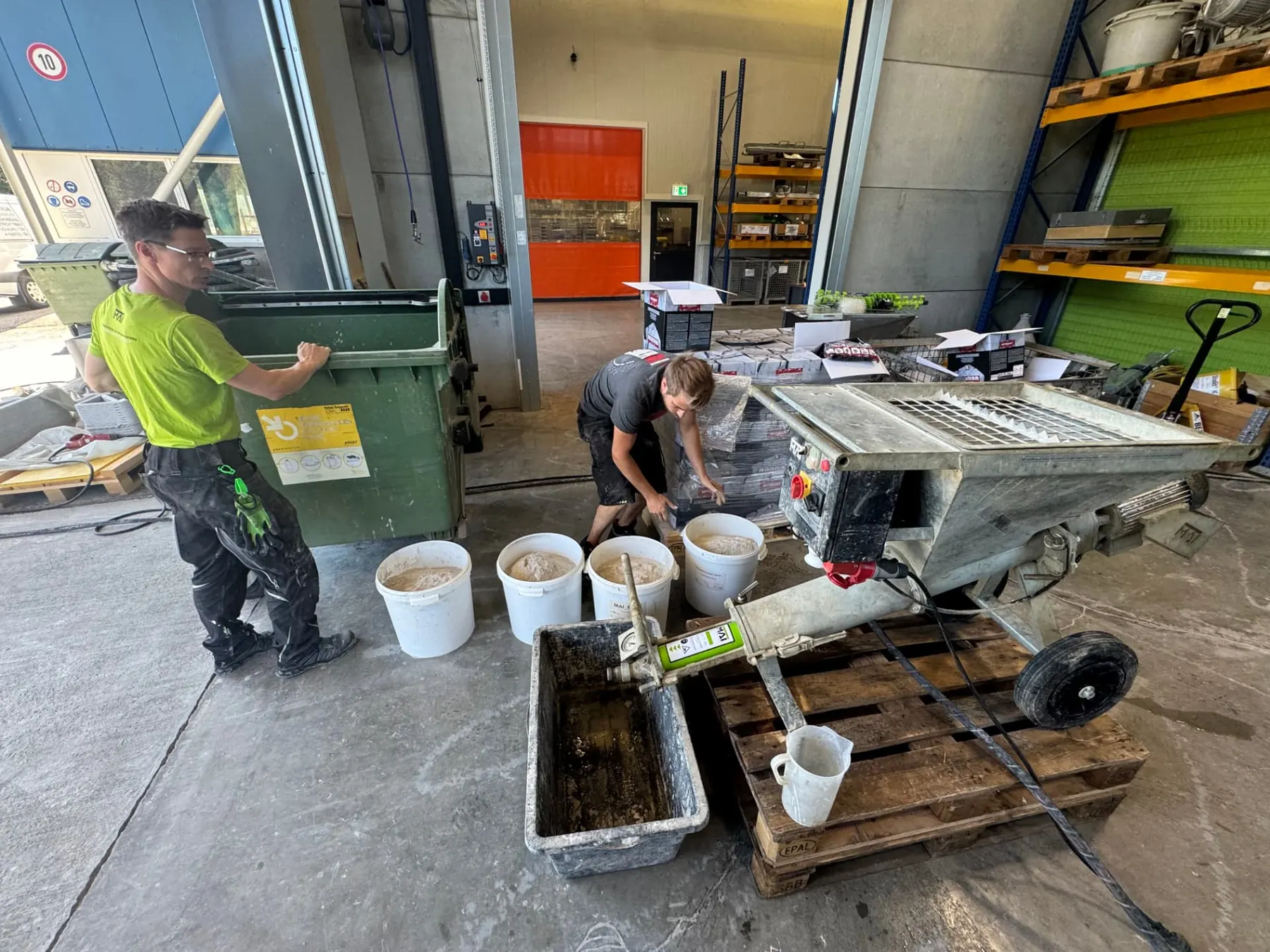
BETONAMIT can be mixed by machine and pumped through a hose straight into the prepared boreholes. The machine is set to tested reference values and therefore delivers a constant mixing result – the basis for large projects in rock, concrete and foundations, with low vibration and without a blasting licence.
- Output
- Tonnes instead of kilograms
- Application
- Mixing pump: mixing and conveying in one process
- Consistency
- Water feed set to tested reference values
- Use cases
- Rock, tunnels, foundations, large demolition
Starting point
Why go mechanical instead of manual?
Hand-mixed expansive mortar is unbeatably simple for small demolition jobs. On large projects hand mixing becomes the bottleneck: batch sizes are limited, every bucket has to be mixed and carried individually, and filling hundreds of boreholes takes time.
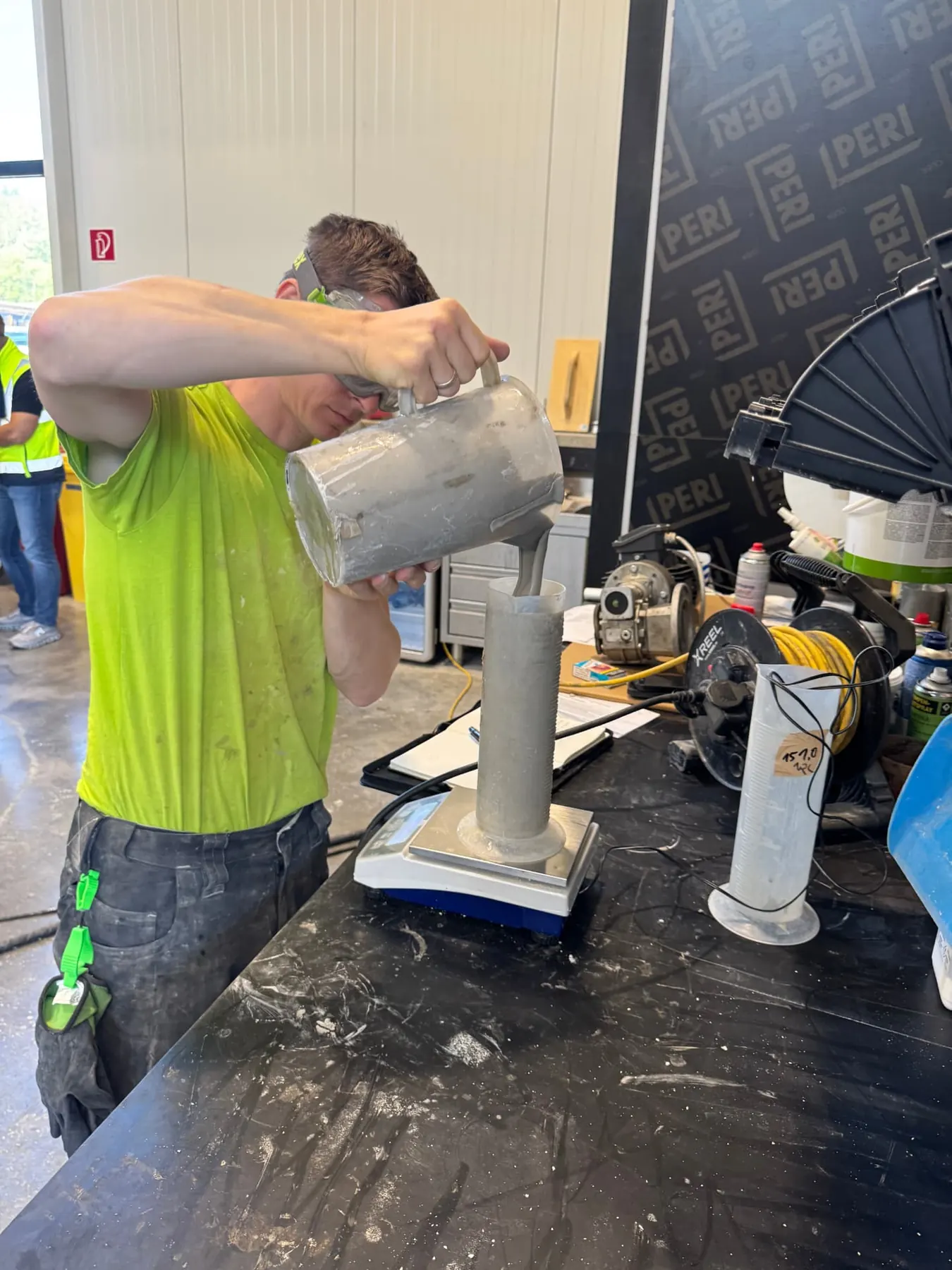
The mixing pump turns this into one continuous process: the powder is mixed inside the machine with the preset water content into a homogeneous mass and pumped forward to the borehole through CE pressure hoses. Because the water feed is set to reference values tested by us and by the manufacturer, the consistency stays the same throughout the job – the machine guarantees a constant mixing result.
Mechanical application starts to make sense from around three to five tonnes of material. In practice these are sites where conventional blasting is not permitted or where vibration has to be avoided – there, ten, fifty or several hundred tonnes of BETONAMIT are placed.
- Substantially higher output – tonnes instead of kilograms
- Constant mixing result thanks to the preset water feed
- Less physical strain: no carrying of buckets
- Boreholes filled through the hose, easily down to 10 m depth
- No time pressure during mixing: mixed material is in the borehole in under a minute
Process
How it works on site
01
Create the drilling pattern
Drilling grid, hole depths and hole diameters are executed according to the technical specifications for BETONAMIT. On large projects we agree the drilling pattern together.
02
Set up the machine
The mixing pump is set to the specified values until the desired consistency is actually reached. From then on the setting – and therefore the mixing result – stays constant.
03
Connect the hose
The pressure hose, up to 30 metres long, is attached to the machine. Filling of the prepared boreholes can begin without repositioning the unit.
04
Mix and convey
The screw or mortar pump processes the powder, mixes it with the preset water content into a homogeneous mass and pumps it forward through the CE pressure hoses.
05
Fill the boreholes
The holes are filled through the hose from the top. The mass has the same consistency as a hand mix and runs all the way down – easily down to 10 metres of borehole depth.
06
A two-person team
Two people usually work together: the machine operator feeds material into the hopper and keeps an eye on water and material flow, while the front man fills the boreholes at the hose. Both stay in constant communication.
On site
Mixing, conveying, filling – on video
Equipment
Set it once instead of measuring constantly
The set-up stays deliberately simple: hopper, mixing zone, screw pump and pressure hose. What matters is the correct basic setting of the water feed – once it is set, the unit delivers the same consistency continuously. Nothing has to be weighed or measured on site afterwards.
Recommended equipment
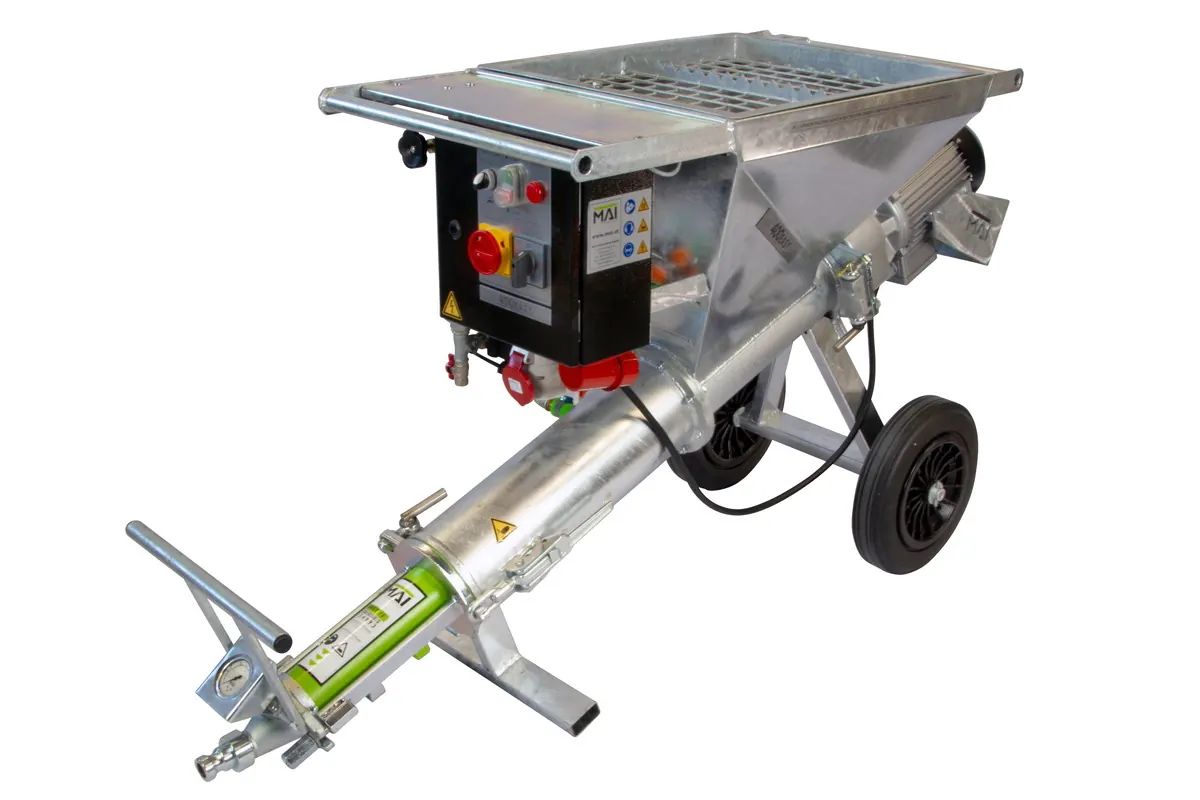
MAI®400EASY PLUS – injection mixing pump
For the mechanical application of BETONAMIT we recommend the MAI®400EASY PLUS from MAI International. The compact injection mixing pump mixes and pumps the mass in one process straight into the borehole – mobile, robust and, thanks to its low power draw, even operable from a generator. Inquiries for the unit can be placed directly with MAI International; as a guideline, the current price range is around EUR 10,000 – 14,000 depending on the configuration. Mention right from the start that the equipment is intended for processing BETONAMIT non-explosive cracking agent – MAI has proven know-how in this application and will be happy to provide technical advice.
- Light and compact – usable even in hard-to-reach terrain
- Suitable for generator operation thanks to low power consumption
- Robust design with wear-resistant MAI®CODUR components
- Easy cleaning: the mixing zone dismantles quickly
- Output rate
- up to 23 l/min
- Delivery pressure
- up to 25 bar
- Hose length
- pressure hose up to 30 m
Technical specifications
Reference values for mechanical application
| Parameter | Reference value |
|---|---|
| Borehole diameter | recommended 30 – 45 mm; 20 mm and less for small stones, 60 mm and more on large projects – in consultation with us |
| Borehole spacing | typically approx. 10 × the diameter; with large holes and predetermined breaking lines even 2 – 3 m is possible |
| Borehole depth | barely limited – depths of 10 m and more can be filled |
| Water content | 1.0 – 1.2 litres per 5 kg of BETONAMIT – reliably held via the machine setting |
| Working time | effectively irrelevant: the material is mixed and pumped continuously and reaches the borehole in under a minute |
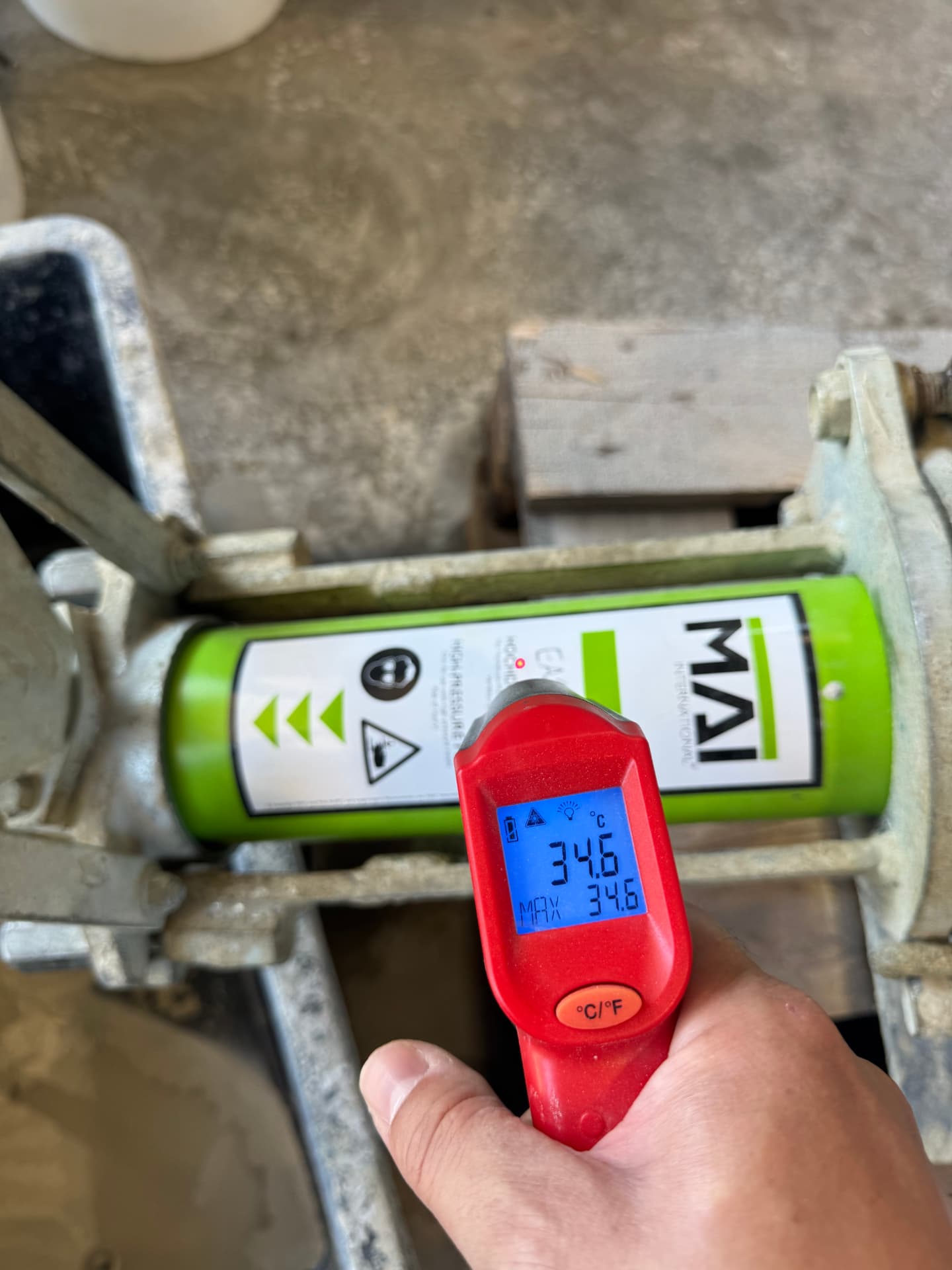
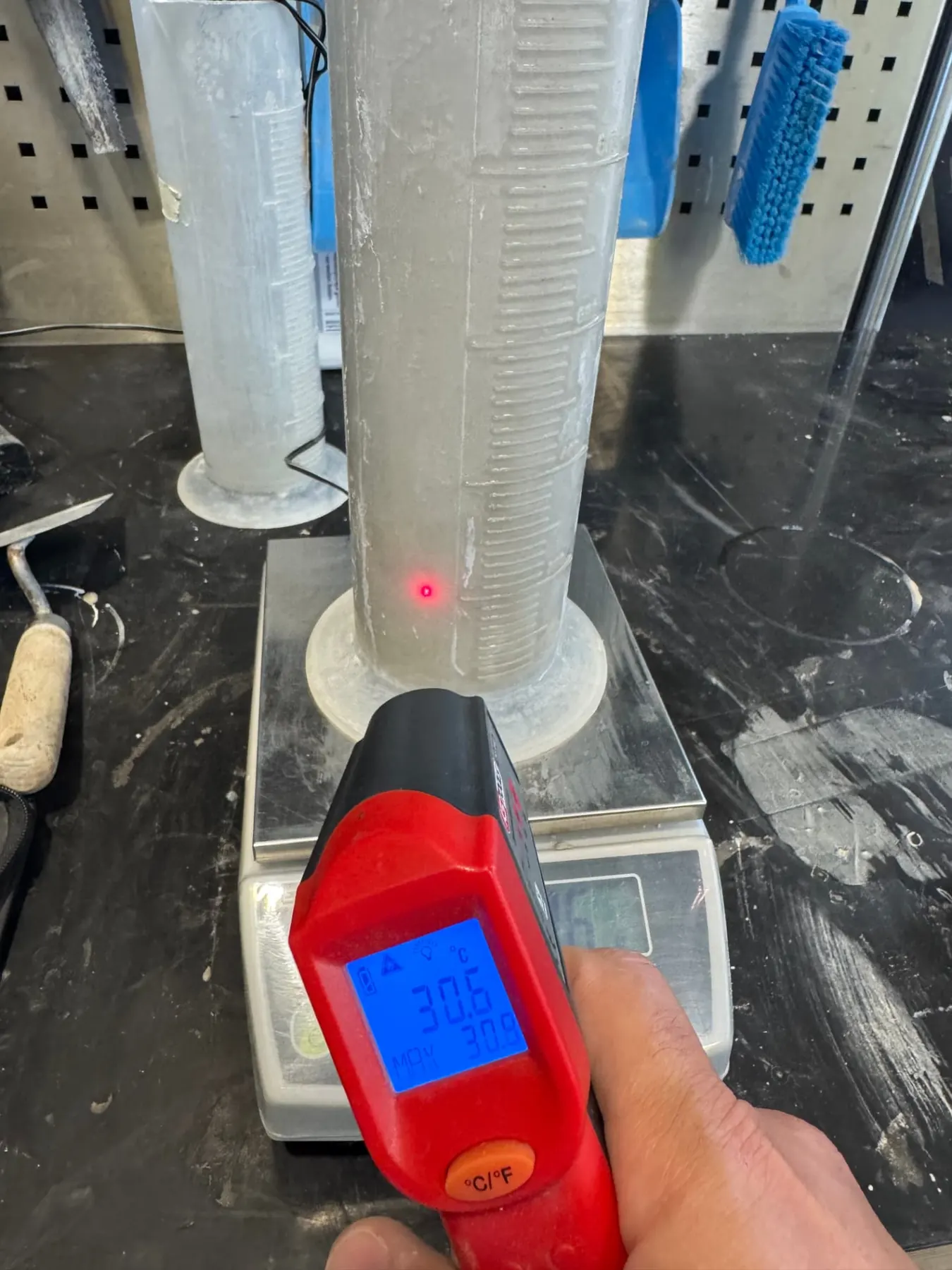
| Material temperature | the finished mix should be below 35 °C when it enters the hole |
These are reference values for mechanical application. On large projects we agree the drilling pattern and settings together – the current product and safety data sheets are always binding.
Safety
Blow-out effect and protective measures
Never put your head or face over a filled borehole
With large borehole diameters and on large sites, blow-outs become more likely: material is ejected from the hole in a relatively explosive manner, usually as a dust cloud from the top 20 – 30 cm. No vibration is produced, the material further down keeps reacting normally and the result is usually still very good. The only serious risk is being hit in the face – so wear safety goggles and gloves and never put your head or face over a filled borehole.
Questions and answers
Frequently asked questions about mechanical application
+From what quantity is mechanical application worthwhile?
It starts to make sense from around three to five tonnes of material. Typical large sites place ten, fifty or several hundred tonnes of BETONAMIT – that is where the method shows its strengths.
+How is the water volume controlled?
It is not re-measured continuously; it is set on the machine according to reference values tested by us and by the manufacturer. The guide value is 1.0 – 1.2 litres of water per 5 kg of BETONAMIT. The machine then ensures a consistently identical mix.
+Are the boreholes filled from the bottom?
No. As with hand mixing, filling is done through the hose from the top. The mass has the right consistency and runs all the way down – easily down to 10 metres of borehole depth.
+How many people are needed?
Usually two: a machine operator at the unit who feeds material into the hopper and watches water and material flow, and a front man who fills the boreholes at the hose. Both stay in constant communication.
+How long can the hose be?
With the recommended mixing pump, pressure hoses of up to 30 metres are possible. That covers a large working area without repositioning the machine.
+What role does temperature play?
Mixing introduces energy and therefore heat. What matters is that the finished mix is below 35 °C when it enters the borehole. An infrared thermometer lets you check this at any time.
+What is the blow-out effect?
A relatively explosive ejection of material from the borehole, usually as a dust cloud from the top 20 – 30 cm and without vibration. The material further down keeps reacting normally. The only danger is being hit in the face – so never put your head over a filled borehole.
Download
Technical fact sheet as PDF
Process, drilling-pattern guide values, safety notes and FAQ – compact and ready to share with planners and site teams.
Planning a large project?
We support you with the drilling pattern, quantity calculation and machine settings – from pilot test to container delivery.